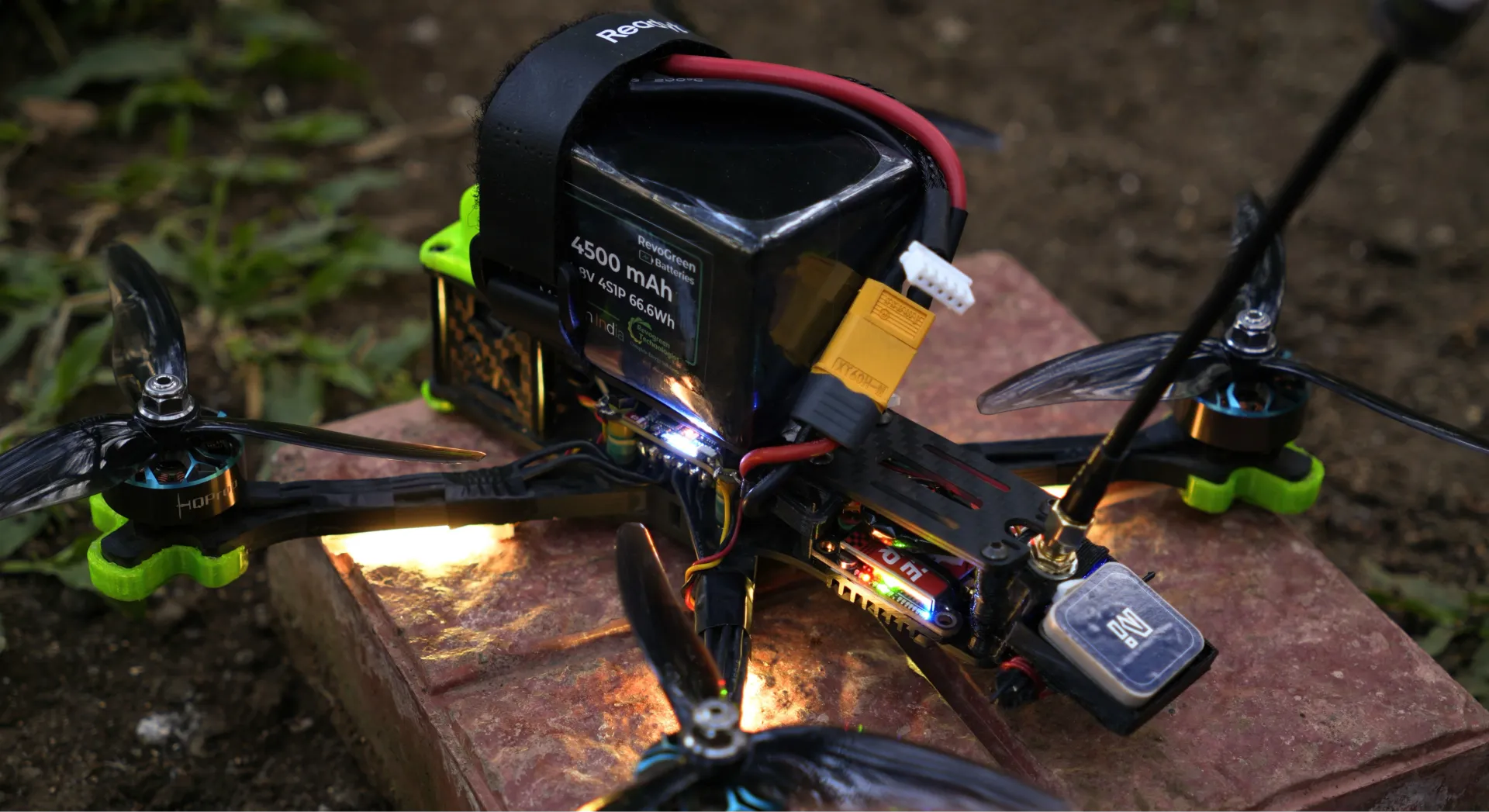
Li-ion vs LiPo Batteries for UAV Applications
Which Battery Is Better for Drones?
Choosing the right battery is one of the most critical decisions in UAV (Unmanned Aerial Vehicle) design. The battery directly impacts flight time, payload capacity, safety, operating cost, and overall mission reliability.
The two most widely used battery technologies in drones today are Lithium-ion (Li-ion) and Lithium Polymer (LiPo). Although both are lithium-based, they are optimized for very different UAV mission profiles.
In this blog, we compare Li-ion vs LiPo batteries for UAV applications to help drone OEMs, system integrators, and operators select the right battery technology for their needs.
Key Features of Li-ion Batteries for UAVs
- High energy density (more Wh/kg)
- Longer cycle life
- Better thermal stability
- Ideal for endurance-focused and mission-critical UAVs
Key Features of LiPo Batteries for UAVs
- Very high discharge rates
- Optimized for high power density in limited volume
- Suitable for short-duration, high-power flights
Li-ion vs LiPo Battery Comparison for UAVs
| Feature | Li-ion Battery | LiPo Battery |
|---|---|---|
| Energy Density | High | Moderate |
| Discharge Rate (C-rating) | Medium (3C–10C) | Very High (20C–100C) |
| Flight Time | Longer | Shorter |
| Cycle Life | 500–1000+ cycles | 200–400 cycles |
| Thermal Stability | High | Moderate to Low |
| Swelling Risk | Very Low | Higher over time |
| Maintenance | Low | Higher |
| Best Use Case | Endurance & Industrial UAVs | FPV & High-performance UAVs |
Which Battery Is Better for Long-Endurance UAVs?
For UAVs where maximum flight time, stable power delivery, and reliability are priorities, Li-ion batteries are the better choice.
- Stay airborne longer
- Carry additional sensors or payloads
- Operate efficiently in demanding environments
Typical Li-ion UAV applications include:
- Surveillance and reconnaissance drones
- Mapping and surveying UAVs
- Industrial inspection platforms
- Defence and BVLOS UAV systems
Safety and Reliability Considerations
- Li-ion batteries offer better thermal stability and aging behavior
- LiPo batteries are more sensitive to overuse, imbalance, and mechanical damage
For commercial, industrial, and defence UAVs, predictable performance and long-term reliability often outweigh peak discharge capability.
Cost and Lifecycle Economics for UAV Fleets
While LiPo batteries may appear cheaper initially:
- They degrade faster
- Require frequent replacement
- Increase long-term operating costs
Li-ion batteries offer:
- Longer service life
- Predictable degradation
- Lower total cost of ownership for UAV fleets
Custom UAV Battery Solutions
There is no universal "Perfect" battery for all drones. The right solution depends on mission profile, power demand, environmental conditions, and lifecycle expectations.
At Revogreen Batteries, we design application-specific UAV battery systems including:
- Custom voltage and capacity configurations
- Endurance-optimized designs
- Ruggedized packs for industrial and defence use
- Smart batteries with monitoring and data logging
Looking for Custom Battery Solutions?
Revogreen Technologies designs application-specific battery systems for UAVs, defence, and industrial applications.
Get in Touch