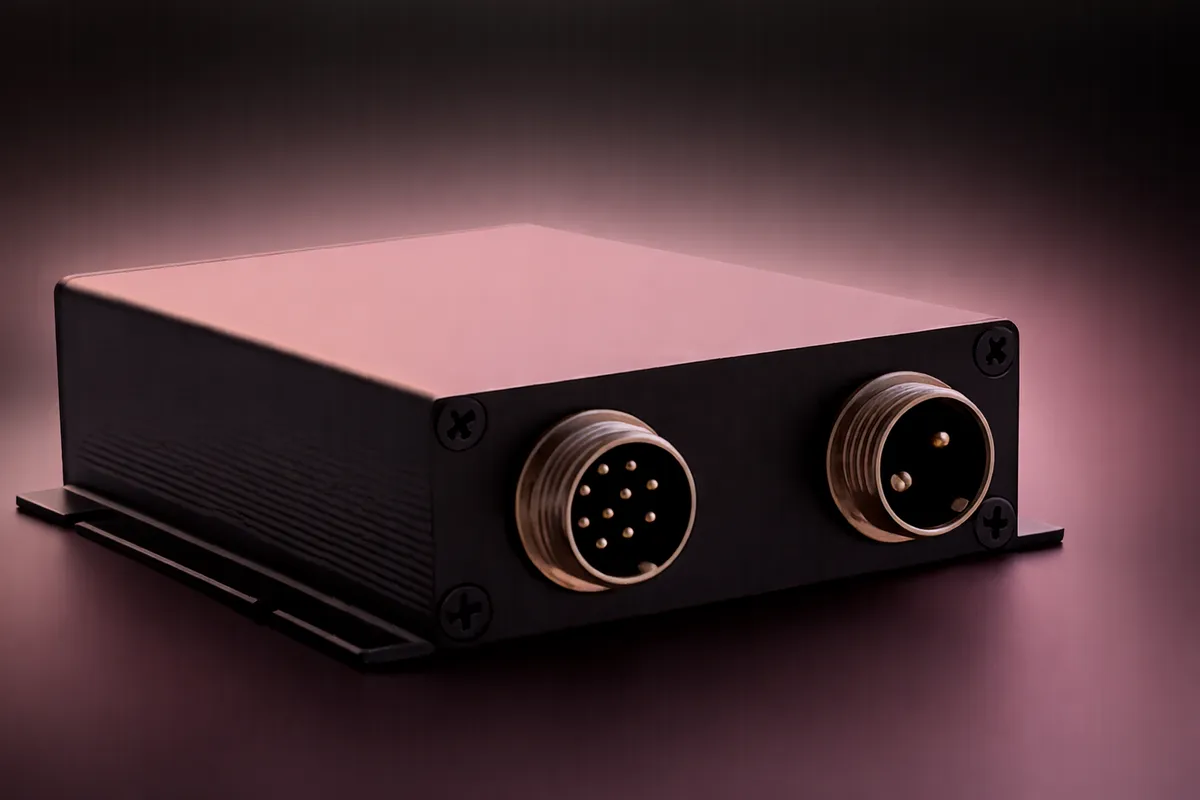
Battery Packs for Autonomous Surface Vessels and Electric Marine Propulsion: From 48 V Workboats to 400 V Drive Systems
An autonomous surface vessel battery pack has a harder job than most people expect. The vessel leaves the dock with a fixed number of kilowatt-hours and no way to top up until it returns. The propulsion motor pulls a steady load for hours, the sensor suite never switches off, and the whole system sits on a wet, salty, conductive platform that moves. If the pack stops, the vessel drifts.
Most integrators reach this point with a good hull, a good motor and a battery designed for something else. It has no plan for spray, no plan for a 50 °C engine bay in a Mumbai summer and no plan for a cell failure ten kilometres offshore. This post explains how we design marine propulsion battery packs so those plans exist from day one.
Understand the marine propulsion load before sizing the autonomous surface vessel battery
Propulsion is a long, moderate discharge. A marine propulsion pack empties over four to twelve hours at a modest C-rate, unlike a drone pack that empties in twenty minutes. The design question is not peak current. It is how much energy the cells can deliver at a modest rate inside an enclosed hull, and how many times they can do it before capacity fades.
Station-keeping and hotel loads never stop. An ASV holding position against current and wind pulses its thrusters constantly. On top of that sit the hotel loads: autopilot, GNSS, radar, cameras, radios and the mission computer. On a surveillance ASV these can exceed the average propulsion draw. We ask for a full mission profile in watts against time, not a motor rating, and we size usable energy against it. Usable energy is what remains after a reserve for the return leg and a low-state-of-charge floor that protects cycle life.
48 V for small craft, 400 V-class for serious propulsion
Current is the enemy on a boat. A 10 kW motor at 48 V draws about 210 A. The same motor at 400 V draws 25 A. For a small ASV or workboat with a 3 to 10 kW drive, 48 V is the right answer. It stays in the low-voltage range, and a 13S to 16S smart pack from our standard 2S to 28S range does the job.
Above roughly 15 to 20 kW, voltage has to climb. A 50 kW ferry drive at 48 V would push over 1,000 A through the hull on cables as thick as a wrist. At 350 to 400 V the same drive runs on cables a crew can route, the inverter and motor operate more efficiently, and losses fall. The cost is safety: a 400 V-class system needs isolation monitoring, pre-charge, interlocks and trained handling. We design and build across both ranges and help the integrator choose.
Modular kWh-class architecture so one fault does not stop the vessel
Build the pack from modules, not one monolith. A pack of tens of kWh has to fit through a hatch, be carried on deck and be replaced without cutting the hull. We build packs from series-connected modules, each with its own cell-monitoring electronics, under a master BMS. The master BMS aggregates every cell voltage and temperature, manages balancing, estimates state-of-charge and state-of-health, and controls the contactors. Our post on what a battery management system actually does covers that layer in detail.
Parallel strings give you redundancy. For a vessel that must return under its own power, we arrange the pack as two or more parallel strings, each with its own contactor and fusing. If a module in one string faults, the master BMS isolates that string and the vessel continues on the remainder at reduced range. Cell-level fusing limits the damage from a single cell short, and thermal-runaway propagation containment between modules keeps one bad cell from becoming a hull fire.
Saltwater is a sealing and corrosion problem first
Seal for immersion, not just spray. A pack in a bilge or on an open deck will meet standing water. We design the pack to fit the integrator's sealed enclosure, and specify the gasketing, glanded entries and vent membrane it needs. Without the vent, a sealed box breathes in moist air on every cooling cycle and fills with condensation. The same discipline carries over from our underwater robotics battery packs designed for depth-rated housings, where the pressures are far higher.
Corrosion starts at the fasteners. External fasteners, lifting points and terminals are specified in marine-grade stainless or coated, and dissimilar-metal pairs are isolated so galvanic corrosion does not eat the joint. Internally we pot the electronics and use damped cell mounting and reinforced interconnects that survive hull vibration and wave slam. Modules get rated lifting points for deck handling.
Thermal management inside a hull in Indian conditions
An enclosed hull traps heat. A battery compartment below deck has no airflow and sits above 30 °C seawater, next to a motor controller. The ambient can reach 50 °C before the pack delivers a single amp. Our packs are rated for high-temperature soak to +60 °C, but continuous discharge at elevated temperature still accelerates capacity fade. So we design module-level thermal management for the mission: conduction plates to the hull structure for moderate loads, or a liquid-cooled cold plate sharing the motor cooling loop for high-power ferries. The master BMS supervises every module temperature and derates current before the cells reach a damaging point. The packs are also rated to −30 °C, and the BMS blocks charging below the cell's safe threshold.
HV safety on a wet, conductive platform
Isolation monitoring is not optional on a boat. On a vessel, the hull, the water and the crew form a conductive path. We design the HV pack as a floating system, isolated from the hull, with a continuous isolation monitor measuring resistance between each rail and the chassis. If moisture or a chafed cable drops that resistance below a warning threshold, the BMS flags it; below a lower threshold it opens the contactors. A pre-charge circuit limits inrush into the inverter capacitors so the main contactor does not weld. An HV interlock loop threads through every cover and connector, so opening any of them de-energises the bus before a technician can reach a live terminal.
Keep the house system separate. Even on a 400 V vessel, navigation and comms run at 12 or 24 V. We supply that through an isolated DC-DC stage so a propulsion-bus fault does not take the autopilot down with it.
Charging, solar top-up, chemistry and telemetry
Match charging to the duty cycle. A daily-duty ferry or harbour workboat charges overnight at the dock and opportunity-charges for ten to twenty minutes at each turnaround. That needs a shore charger that obeys current and voltage limits set by the BMS over CAN. A survey ASV that spends a week on station instead needs a large pack charged slowly at the depot, with state-of-charge accurate enough to plan the return. A long-endurance surveillance ASV can add a few hundred watts of deck solar. That will not drive propulsion, but under BMS supervision it covers the hotel load during loiter and extends time on station, much as described in our surveillance system battery post.
LFP for daily duty, NMC for range-limited missions. A ferry cycles every day for years. LFP gives thousands of cycles and strong thermal stability, and its lower energy density matters little when the hull has room for the mass. A survey vessel that must cover the longest track on a fixed displacement gains from NMC, which packs more energy into the same mass. We choose the cell after the mission profile is fixed, not before.
The pack must report, not just protect. The master BMS streams cell voltages, temperatures, current, state-of-charge, state-of-health and fault codes to the vessel controller over CAN, or over RS-485 where the run through the hull is long and noisy. The controller forwards a summary to shore over the mission link, so a port or survey operator sees remaining energy and pack health in real time.
Made in India, engineered for naval, coast-guard and classification contexts
Revogreen Technologies was founded in Pune in 2021 and has delivered more than 30,000 battery packs to over 100 clients. Designing and manufacturing in India supports indigenous-content requirements in naval and coast-guard programmes. Every marine pack passes incoming cell QC, end-of-line testing and batch-level traceability, and ships with documented test records. We design packs to support qualification to IEC 62619 for industrial lithium systems and UN38.3 for transport, and we prepare the design documentation, test records and BMS logs that a classification society, naval acceptance team or coast-guard programme will ask for. Our process runs from requirement capture under NDA through design and validation on your vessel to production. The battery, charger and power management stage have to be designed together, which is the argument of our pillar post on the complete power solution of battery, BMS and charger. If your platform goes below the surface as well as across it, see our underwater robotics battery packs.
Looking for Custom Battery Solutions?
Revogreen Technologies designs application-specific battery systems for drones, defence, robotics, marine and industrial applications.
Get in Touch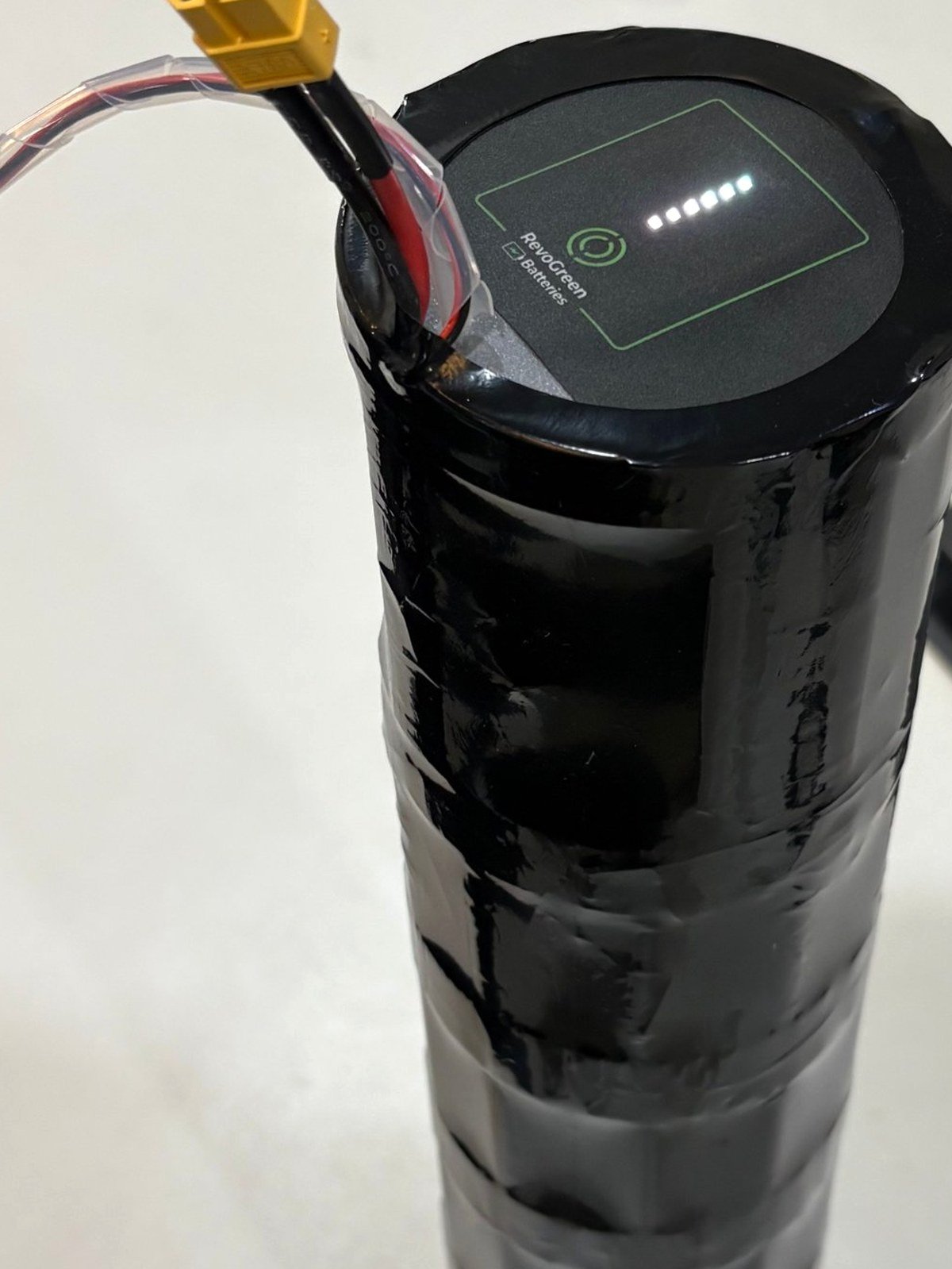 Marine & Underwater
Battery Packs for Underwater Robotics at Depth: Engineering kWh-Class Power for AUVs, ROVs and Seabed Systems
How to engineer kWh-class battery packs for AUVs, ROVs and seabed systems: pressure housings vs oil-filled packs, buoyancy, HV isolation, sealing, fail-safe BMS and endurance modelling.
Marine & UnderwaterROV Battery Replacement and Upgrade in India: More Dive Time, No Import Wait
Replacing or upgrading your ROV battery? Get a locally built lithium pack in India that fits your enclosure, with more runtime and a matched charger. Spares, upgrades and custom sizes from Revogreen.
 Marine & Underwater
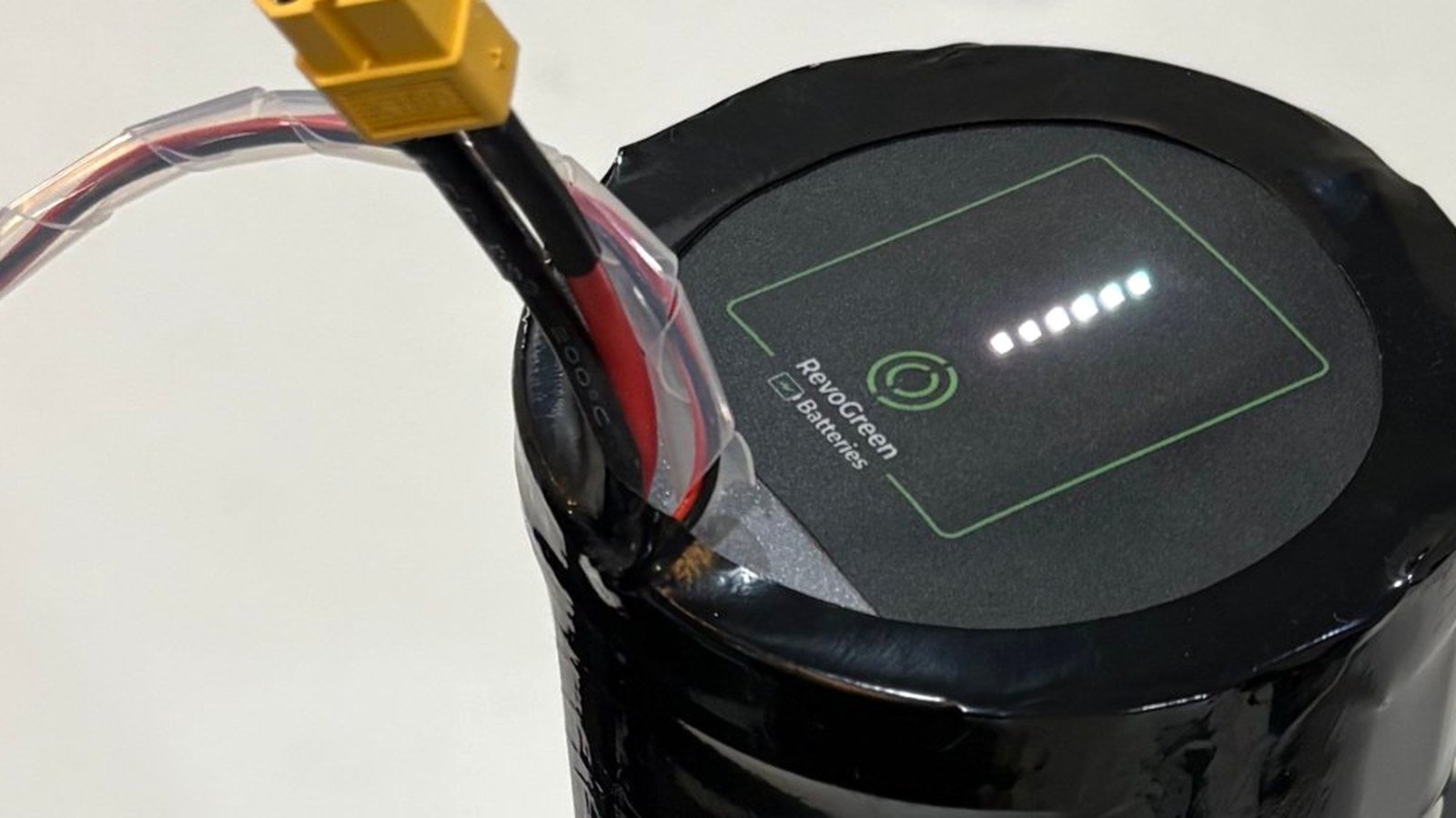
ROV and Underwater Drone Battery Packs: Yes, We Build These
Need a battery for your ROV, underwater drone or AUV? Sealed lithium packs that fit standard enclosures, custom sizes, matched chargers. Designed and built in India by Revogreen.